Designing for Dignity: New Resources on Digital Wellbeing and Gratitude

In a world that often feels rushed and disconnected, how do we help students find their footing?
Closegap partnered with Caitlin Krause, founder of MindWise Consultancy and author of Digital Wellbeing, to launch two new Single-Session Interventions (SSIs) she authored on Gratitude and Digital Wellbeing.
Instead of lecturing students about screen time, Caitlin acts as an "experience designer." Her learning programs and practices include brief, present-focused resources that act as "mindful little bubbles where right now can be the bright moment." Her resources spark curiosity and connection, giving students practical language they can use immediately to navigate their day. “I try to balance the gravity of the topic with the levity of the delivery—like good dance partners.” These resources meet students where they are and are developmentally appropriate to meet their needs.
Why Dignity Is the Foundation of Digital Wellbeing
Caitlin’s work is built on a specific pedagogical framework she calls the "culture cornerstones," with Dignity at the base. The cornerstones also include Freedom, Invention, and Agency, and they are built in consonance, guiding approaches to new technology, too.
“The concept of dignity is a reframe on the word respect,” she explains. Before students can explore or learn, they need relational trust. The Digital Wellbeing SSI helps students identify that baseline of dignity within themselves, so they can recognize when it is being compromised online or in person. As Caitlin explains, “Half the battle is students remembering how much they matter.”
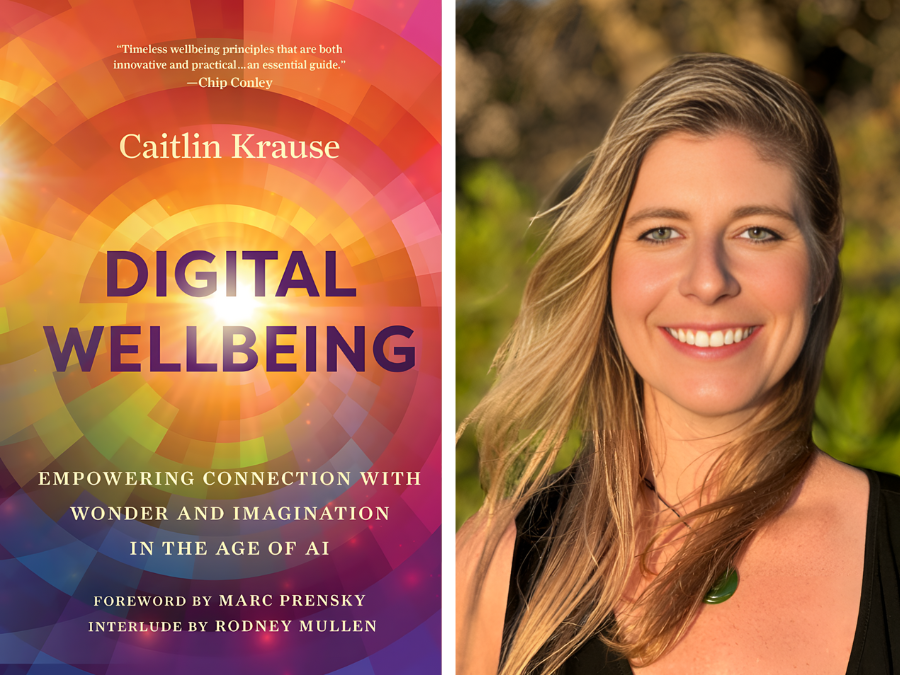
“Half the battle is students remembering how much they matter”
What are the "3 A's" of Mindfulness?
Educators will appreciate the structured design behind these interventions, rooted in Krause’s “3 A’s” of Mindfulness:
Awareness: Tuning into the present moment.
Advancement: Moving past limiting beliefs.
Authenticity: Showing up as you truly are.
She treats awe as an essential resource, not a luxury. Tiny moments of delight help interrupt doom-scroll momentum and build healthier digital habits. “Wonder and awe can be our superpowers.” That little spark can shift a trajectory.
How the Gratitude SSI Builds Student Resilience
Life can be difficult, and Caitlin's Gratitude SSI moves far beyond a simple "thank you" or toxic positivity. Instead, she acknowledges that life can be "crunchy at times" and difficult. Gratitude is a tool to focus on the present.
“Resilience is a system,” Caitlin reminds us. By helping students pause and notice the present, we help them build a system of support that protects them from absorbing the anxiety of the future.
How Educators Can Use These SSIs:
These interventions are quick to start, easy to finish, and simple to return to. Here is how to seamlessly integrate them into your classroom:
Advisory & Transitions: Use the Gratitude SSI to help students settle down after a chaotic transition or high-stress exam. It fits in perfectly between the bell and the bus.
Digital Citizenship Units: Use the Digital Wellbeing SSI to help students understand that their online presence should be grounded in dignity.
Start by helping a student feel seen. Give them simple language to try, and keep the door open for the next step tomorrow. Over time, this outside practice becomes an internal one. "We’re creating a place where students feel they matter," Caitlin says, "and that place will hopefully end up inside themselves."
“We’re creating a place where students feel they matter, and that place will hopefully end up inside themselves.”